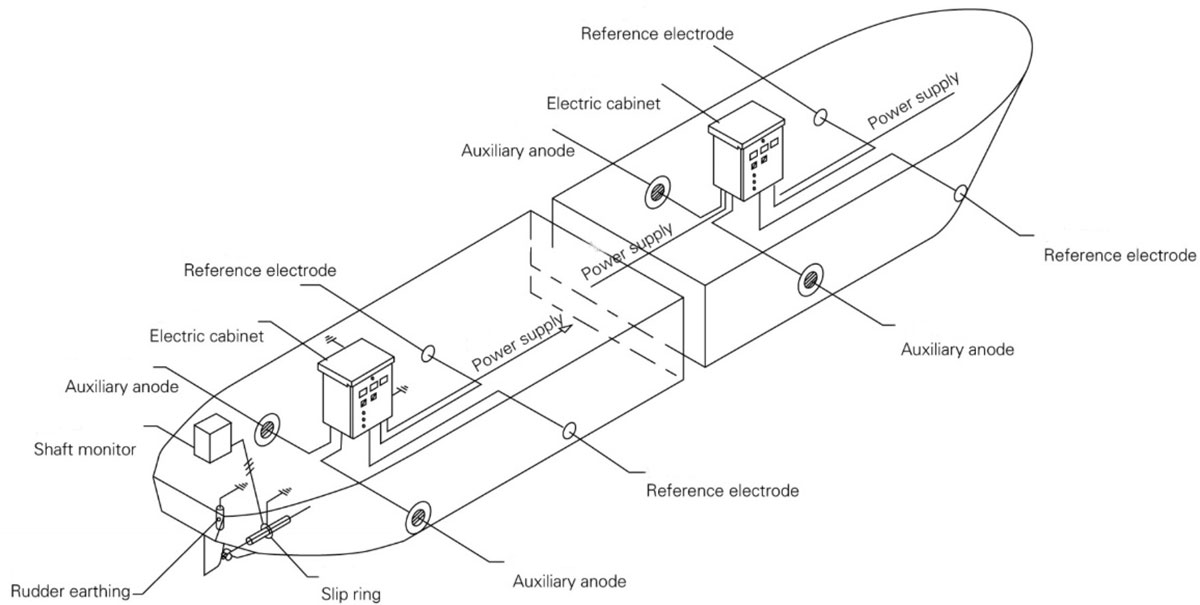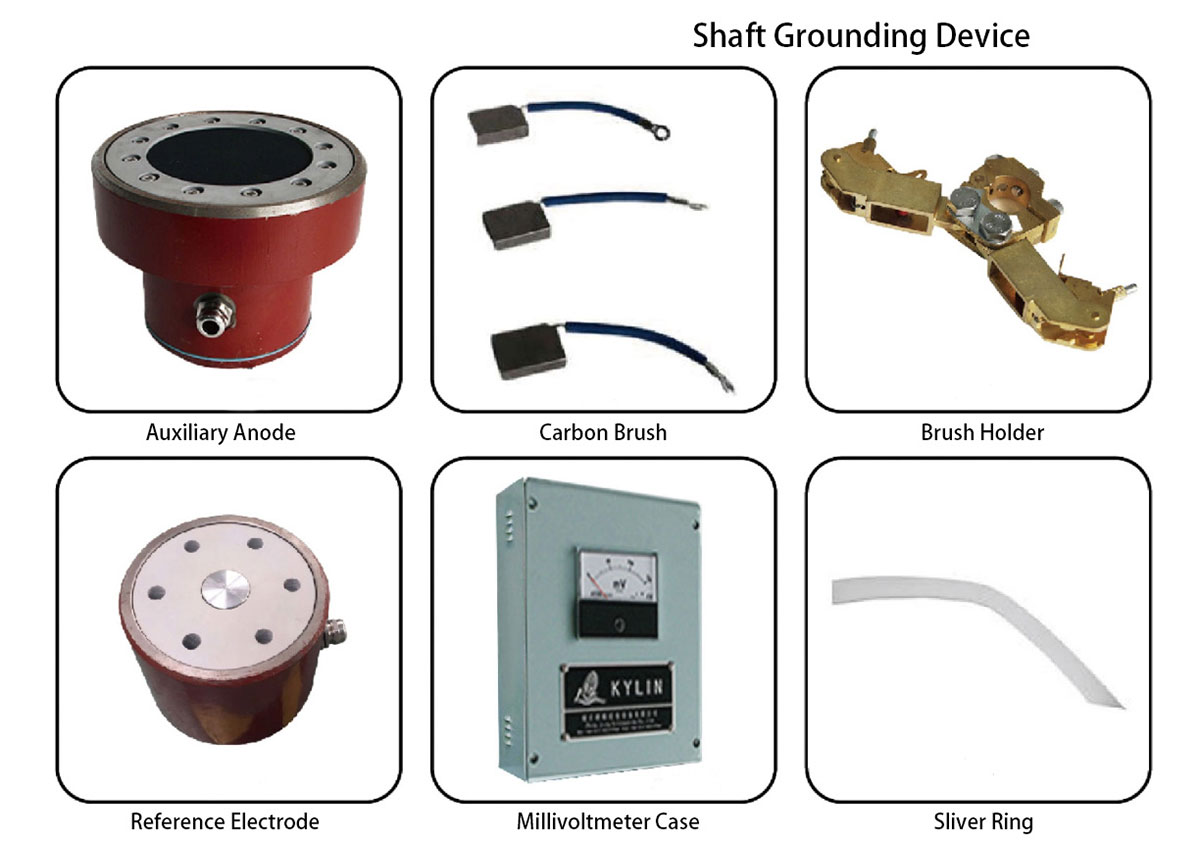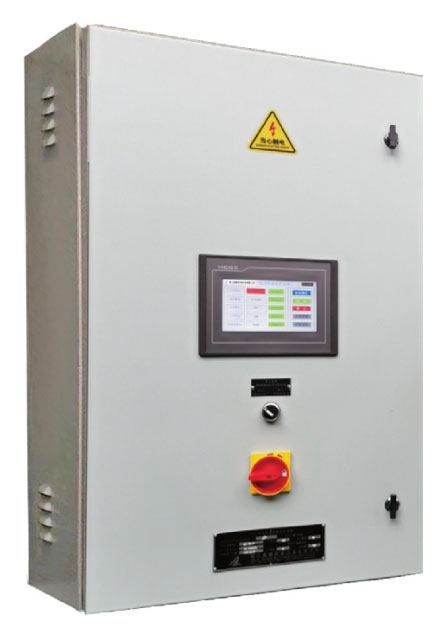
The QLYB series Impressed Current Cathodic Protection (ICCP) system consists of a constant potentiostat (control cabinet), auxiliary anodes, anode shielding layers, reference electrodes, and other components. The function of this system is to protect the underwater parts of the ship's hull from seawater corrosion. Its working principle is as follows: The constant potentiostat supplies direct current (DC), with the positive terminal of the power supply connected to the auxiliary anodes and the negative terminal connected to the hull. When energized seawater forms a circuit, the hull undergoes cathodic polarization. The reference electrodes monitor and adjust the hull's potential to maintain it at the protective level, thus preventing seawater corrosion. This system is capable of automatically adjusting the required protective current according to changes in the ship's external operating conditions, ensuring the hull always stays within the optimal protective potential range.
This system is suitable for inhibiting the formation of corrosive electrons on the steel surface of the hull (after the hull coating is damaged) for various marine vessels, mobile platforms, floating docks, etc. It protects the hull steel from corrosion and replaces the traditional zinc block cathodic protection.
For the QLYB series cathodic protection system, the constant potentiostat models can be selected as 50A, 100A, 200A, 300A, 400A, 500A, or 600A as needed; the auxiliary anode models can be selected as 20A, 25A, 50A, 100A, 150A, or 200A.
Data(m²) | Hull Immerse Area | Propeller Surface Area | Rudder Immerse Area | Protective Current |
- | - | - |
|
Current Density(mA/m²) | 35-45 | 500 | 150 |
|
Current(A) | - | - | - | Σ= |